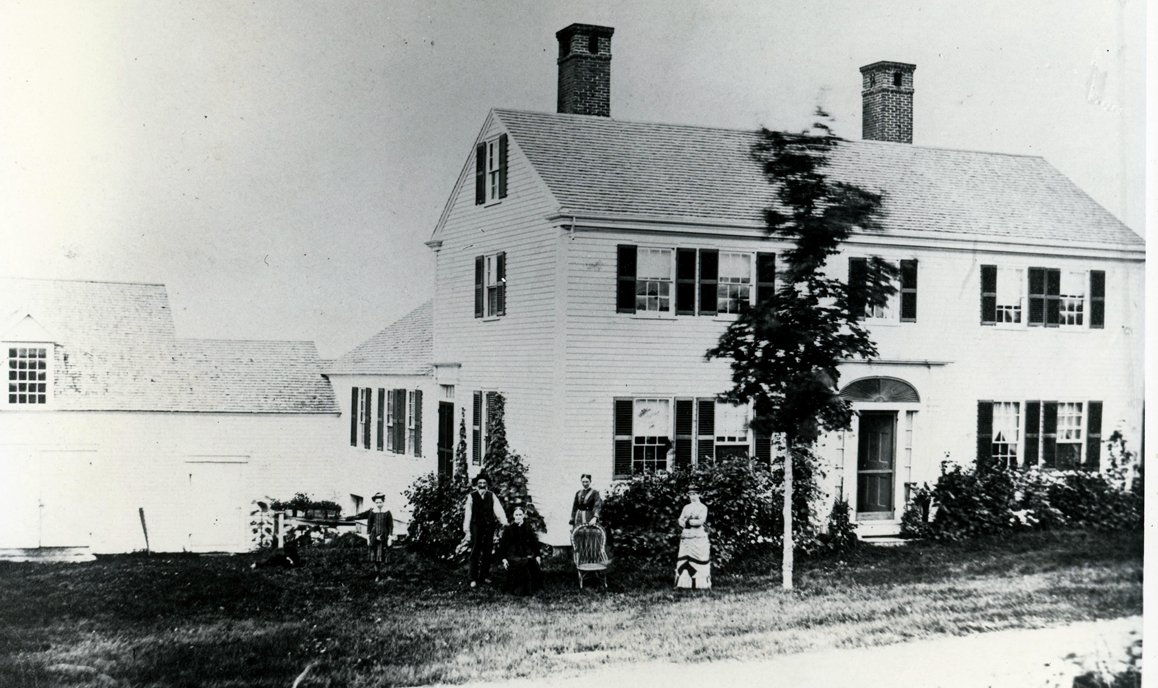
In 2000, Connie Parker acquired the 19th-century Yeaton farmhouse at 422 West Road. She had long remembered her father—an architect from New Jersey—with a fondness for old homes, and his habit of pointing out details such as the hand-carved “fan” over the indigo front door and its historic significance.
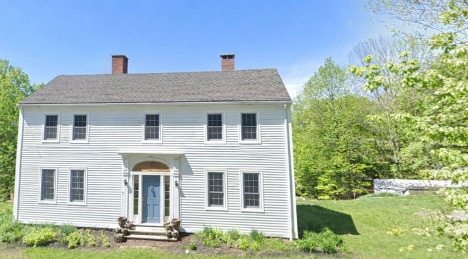
The house was built between 1828 and 1830 by Paul Yeaton. He hand-cut all the beams and boards for the structure from nearby woods, a testament to the craftsmanship and self-reliance of early settlers. Paul’s father, also named Paul Yeaton, was a Revolutionary War veteran from New Hampshire and among the earliest settlers in the Belgrade area. In 1794, he walked to Belgrade from Somersworth, New Hampshire—the first of many Yeatons to live in the town. In lieu of a soldier’s bonus, the newly formed United States Congress granted him a 40-acre land allotment in Belgrade.
Paul Yeaton never married during the early years of the house. His brother Andrew, Andrew’s wife, and their five children lived with him for many years, until Paul later fell in love with a much younger woman.
With the assistance of local antique dealers, the Taber family furnished the house with period-appropriate furniture dating to the 1820s and 1830s, supplemented by items from their family camp. Much of the home’s original architectural fabric remains intact, including interior shutter doors, original door hardware, and 9-over-6 window sash.
The long tenure of the Yeaton family contributed to the preservation of both the house and its associated outbuildings.
Historic farm tools remain on site, along with an original ox cart stored in the barn. The house retains its original brick fireplace, including beehive ovens once used for smoking hams. A blacksmith shop occupies the basement, and an attached carriage house survives as part of the original working farm complex. An early cooper’s shed also remains on the property, reflecting the self-sustaining nature of the Yeaton farm.
Excerpts from the Morning Sentinel, June 30, 2002