A Legacy by the Lake: The History of Abena Camp for Girls
In the heart of Maine’s lakes region, nestled along the serene shores of Great Pond in Belgrade, stood a place that for generations of young women was more than just a summer retreat—it was a sanctuary of growth, friendship, and adventure. Abena Camp for Girls, founded in the early 20th century, became one of the region’s most cherished summer camps, weaving its legacy into the broader cultural and social fabric of Maine’s camp tradition.
Founding and Philosophy
Abena Camp was established in 1919, at a time when the summer camp movement in the United States was flourishing. With a growing awareness of the value of outdoor education and character-building for youth—particularly for girls in an era of expanding social roles—Abena was envisioned as a place where young women could cultivate independence, leadership, and a deep appreciation for nature.
The camp’s name, “Abena,” is derived from Native American roots, reflecting a reverence for the natural beauty and heritage of the region. Located on a pine-lined stretch of Great Pond (the same lake that inspired E.B. White’s Once More to the Lake), Abena quickly developed a reputation for offering a balanced and enriching experience rooted in tradition, outdoor exploration, and personal growth.
Life at Camp
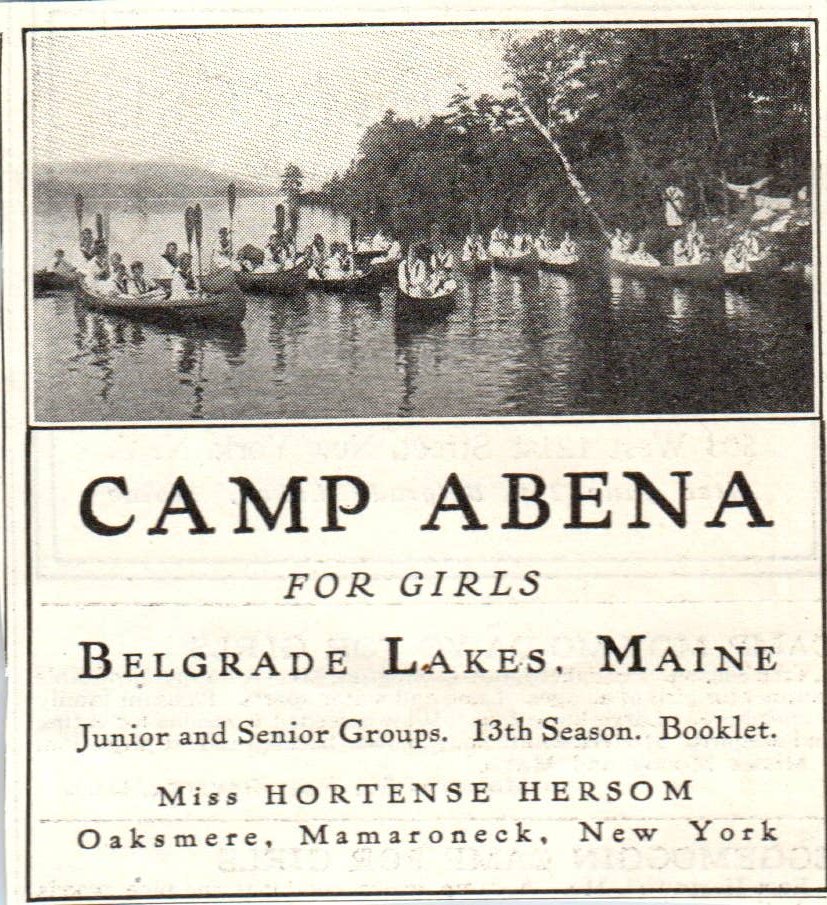
Campers arrived from across New England and beyond, often returning year after year. They spent their summers in rustic cabins, waking to the sound of loons and the glimmer of morning light on the lake. The days were filled with canoeing, swimming, sailing, hiking, archery, arts and crafts, music, and nature study.
Abena was notable for its emphasis on values-based education. Leadership, teamwork, self-reliance, and service were woven into the daily rhythms of camp life. Songs, rituals, and traditions—many passed down over decades—fostered a deep sense of community and continuity. The camp operated with a spirit of integrity, inclusiveness, and joy, offering a nurturing environment that helped generations of girls develop confidence and lifelong friendships.
Cultural and Community Impact
Abena was part of a wider network of camps that turned the Belgrade Lakes region into a summer destination known for excellence in youth development. For the town of Belgrade, the camp brought a seasonal infusion of energy and economic vitality. Local residents served as staff, tradespeople, and guides, while businesses thrived from the influx of families and visitors each summer.
Many former campers and counselors from Abena went on to become leaders in education, public service, the arts, and community life—carrying with them the lessons and memories forged on the shores of Great Pond. Alumni gatherings, newsletters, and reunions helped sustain the Abena spirit long after the tents were packed away.
Transition and Legacy
Like many traditional summer camps, Abena eventually closed its doors as societal shifts and changing recreational preferences altered the landscape of summer programming. While the exact date of its closure is not always clearly recorded, the legacy of Abena endures in the hearts of those who experienced its magic.
Today, the site of Abena Camp remains a treasured part of Belgrade’s natural and cultural heritage. Former campers continue to visit, remembering days spent under towering pines and starlit skies, the laughter of friends echoing across the water.
In telling the story of Abena Camp for Girls, we honor not only a place but a philosophy—a belief in the power of nature, community, and mentorship to shape the lives of young women. Belgrade is proud to have been the home of such a meaningful institution, and the spirit of Abena continues to ripple across Great Pond, quietly reminding us of summers well spent.