
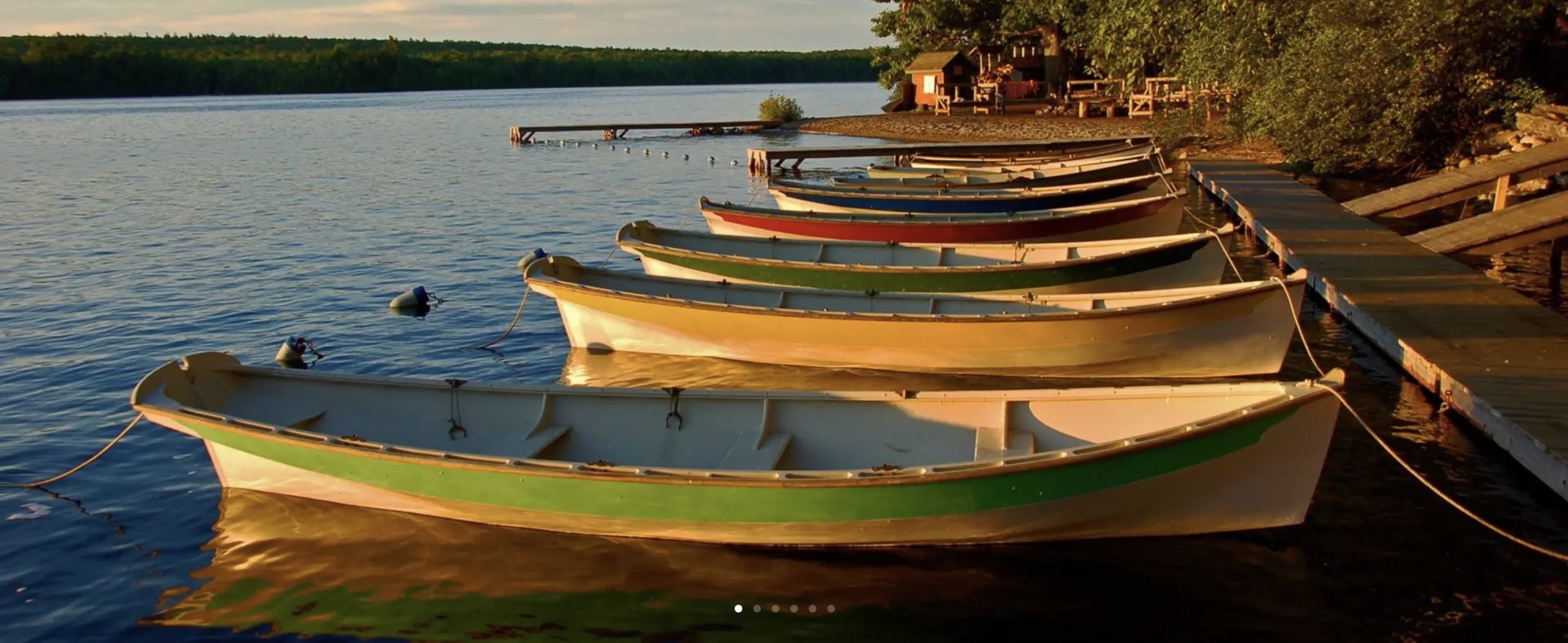
Founded in 1902 by Clarence Colby, Pine Island Camp occupies a wooded island in the middle of Great Pond, the largest lake in the Belgrade Lakes region. From its earliest years the camp’s location — accessible only by boat — reflected Colby’s belief that boys would learn through immersion in nature, shared responsibility, and simple living. The island’s rocky shores and tall pines have long shaped both daily life and the camp’s enduring character.
In 1908 the camp was acquired by Dr. Eugene L. Swan, whose family would guide Pine Island for more than a century. Under Dr. Swan, and later his son Eugene “Jun” Swan, many of the camp’s defining programs and traditions took shape. Campers lived in canvas tents on wooden platforms, worked together in daily routines, swam and rowed on Great Pond, and undertook extended wilderness canoe trips. The camp emphasized independence, cooperation, and respect for the natural environment of the Belgrade Lakes.
Ritual and shared experience have always been central to Pine Island’s culture. The King’s Game, a multi-day, island-wide competition blending strategy, endurance, humor, and teamwork, has become one of the camp’s most celebrated traditions — a unique test of community and spirit. The annual Thorndike trips, extended canoe expeditions into Maine’s backcountry, require paddling, portaging, campcraft, and group problem-solving, forging deep bonds among campers and staff alike.
A defining moment in the camp’s history came in 1996, when a devastating fire destroyed seven buildings on the island. The blaze forced the camp to rebuild much of its infrastructure to meet updated health and safety codes. As part of that restoration, Pine Island was connected by its first electric cable to the mainland, marking a subtle shift in facilities while still preserving the camp’s intentional simplicity — campers continue to live without electricity or running water in their tents.
The response to the fire revealed the strength of the Pine Island community. Alumni, families, and local supporters rallied to raise funds and resources, ensuring that the camp could be restored in a way that honored its historic character. Rebuilt facilities were designed to retain a rustic feel while improving durability and safety, preserving the island’s unique atmosphere for future generations.
Today Pine Island Camp operates as a nonprofit organization led by Ben and Emily Swan, continuing the principles established more than a century ago: simplicity, mutual responsibility, and learning through the outdoors. While essential infrastructure has been modernized where necessary, the spirit of the camp remains remarkably consistent with its early years.
For the Belgrade Lakes region, Pine Island Camp is an important part of local history and landscape. Its docks, boats, tents, and evening campfires have been a familiar presence on Great Pond for generations. Thousands of boys have arrived by launch each summer, leaving weeks later with lasting friendships, confidence, and a lifelong connection to the lakes and forests of Belgrade.